Capital Region Breastfeeding and Childbirth Education
VBAC Series: April is Cesarean Awareness Month
April is Cesarean Awareness Month. This seems to be designated by the International Cesarean Awareness Network, but I can't really find anything about its origin.
Part of awareness is knowing your hospital's cesarean section and VBAC rates. Leap Frog Group collects information from hospitals about their first time cesarean section rate. This is under the classification of cesarean section, which is not immediately obvious that it is referring to only first time mother's whose baby is in the head down position.
Consumer Reports recently reported on the variation in hospital’s first time cesarean section rate based on the Leap Frog Group data. Neighboring hospitals may have very different cesarean section rates. While some hospitals may claim they have a higher risk population driving their cesarean section rate, this statistic is based on low risk mother's only, leaving no room for that argument.
While many larger New York City hospitals declined to submit their data to Leap Frog Group, New York State collects similar information. However, in the NYS data there does not seem to be a difference between high or low risk mothers. Additionally, primary cesarean section rate may also include mom's who had a previous vaginal delivery, but had a cesarean section in a following pregnancy. Even without the separation of low risk to high risk pregnancies, the data is somewhat telling, especially between large academic medical centers where patient population should be similar. NYS data also contains information on their VBAC rate, defined as the number of women delivering vaginally with a previous cesarean section, the denominator is all women delivering with a previous cesarean section.
Other states may have cesarean section data available. In a quick search New Jersey and Massachusetts seemed to have reports on the information, rather than an interactive website. Have information for your state? Feel free to post a link to it in the comments below.
VBAC Series: What Else Does ACOG Have to Say?

www.freeimages.com/ Nic O' Reilly
Despite the negative effects of the ACOG practice bulletin on vaginal birth after cesarean, the document does contain many positive points that are often ignored by obstetric care providers. I encourage you to read the document if you are pursuing or deciding if you want to pursue a VBAC.
Here are a few highlights:
1. It is reasonable to attempt a trial of labor after cesarean if you have had two low transverse cesarean sections. This is also true if the woman does not know what type of scar she has.
2. While macrosomia may increase the risk of uterine rupture, this alone should not solely make the decision of repeat cesarean.
3. Going past her due date may decrease the likelihood of successful vaginal delivery, but this does not mean she should not attempt a TOLAC.
4. Twins have similar success rate of VBAC as singletons.
5. It is reasonable to induce or augment a TOLACs labor, but care should be taken in doing so.
6. External cephalic version (attempt to turn a breech baby vertex) can be considered to avoid repeat cesarean.
7. Women can chose epidural analgesia as in any labor.
If you are finding your provider is putting multiple stipulations of on your pursuit of a VBAC (delivery by due date, only if baby isn’t thought to be too large, etc) you may want to compare their care to this practice bulletin. In the end, you want a provider who believes VBAC is a good thing, rather than someone who will just “allow” it to happen under their strict criteria.
VBAC Series: What Does ACOG Have to Say?

The American College of Obstetrics and Gynecology (ACOG) issued a practice bulletin in 1999 about Vaginal Birth After Cesarean. Within this practice bulletin, providers were encouraged to counsel women regarding VBAC and the likelihood of their success, but that delivery should only occur in a setting where immediate emergency care can be offered. While the first part of the recommendation is based on good scientific evidence, the second part of the recommendation is based solely on consensus and expert opinion.
In 2010 a new practice bulletin was created, and this was reaffirmed in 2015. The 2015 version starts by mentioning the large decrease in the number of women attempting a Trial of Labor after Cesarean (TOLAC). In 1996 the number of VBACs reached 28.3% (that is the percent of women delivering vaginally after a prior cesarean), and now most sources put the VBAC rate around 10% nationally.
Why the shift? The ACOG bulletin states the increasing fear of uterine rupture and liability has led to the sharp decline. However, they fail to mention their own statement about access to emergency care as part of the decline. While there was a slow decline from 1996-1999, the decline steepened after the release of the 1999 practice bulletin.
In a 2007 paper in Birth journal, researchers called over 200 hospitals in their region, and found 30% had stopped offering VBACs based on the 1999 ACOG practice bulletin. As a result access to VBAC has become far more limited in this area, and one could imagine this is also the case nationally.
This report appears to have a great deal of information about VBAC and its safety, but I admit at 300+ pages, I have only begun to skim through it. It also makes mention of this paper starting the decline of VBACs (check out the graph on page 12 of the report) in addition to the ACOG practice bulletin.
The ACOG practice bulletin has MANY good points about VBAC and how the majority of women are good candidates for a trial of labor. What is unfortunate, though, is how a single statement based on consensus and expert opinion, rather than scientific evidence, has done so much to shape access to a TOLAC.
Caffeine During Pregnancy, Safe or Not?

There are a lot of mixed views on the safety of caffeine in pregnancy. This uncertainty may come from the mixed research results. Two immediate, probably uncontrollable flaws of caffeine research are, it is based on maternal recall/truthfulness and the inability to know the true caffeine levels consumed. This makes interpreting the results more difficult.
What we do know is that caffeine readily crosses the placenta, and mothers metabolize caffeine more slowly during pregnancy. Currently, ACOG recommends caffeine intake remains below 200mg a day. A brewed drip cup of coffee has about 137mg of caffeine in 8oz (though their cited source now says 95 mg) and tea is estimated to be about 48 mg. In ACOG's opinion, there does not seem to be a clear risk between moderate caffeine consumption and miscarriage, but they also don’t feel they can raise the recommendation higher at this point. ACOG also does not find a definite link between caffeine and preterm birth. More research is needed to see if there is a correlation between caffeine and intrauterine growth restriction.
I keep seeing a reference to the World Health Organization recommending less than 300mg per day, but I have yet to find this in a document. The only thing close was a WHO European document from 2001, recommending intake be no more than 3-4 cups of coffee a day. (If anyone finds a proper source, please let me know!)
While ACOG looked at two large studies in regards to caffeine and miscarriage, a recent meta-analysis included 14 studies. The authors' conclusion was high levels of caffeine consumption (>350mg per day) was related to increased miscarriage risk.
In looking at low birth weight, another meta-analysis found that high levels of caffeine were associated with lower birth weight. High level was not defined. 13 studies were included.
This was the only study I could find related to a possible increase risk of preterm birth. It seems there might be an association between preterm birth and Japanese and Chinese Tea; soft drinks and coffee did not have the same effect.
It appears that 200-300mg of caffeine a day is safe during pregnancy. Knowing this, it is a good idea to consider all sources, and know the amount you consume.
For someone who personally loves coffee, limiting my consumption during pregnancy is tough, especially once the nausea subsides. Part of the love is related to the feeling of a warm mug in hand, so I try to find some substitutes. I will make my coffee half decaf. And while drinking a cup of total decaf coffee is often not palatable, I do like decaf black tea. This year I have tried hot water with lemon and honey. Though not my loved cup of coffee, overall it hits the warm mug in hand spot.
Thoughts of caffeine? Any good substitutes you have found?
A Taste of Ina May
I hope that you have heard of Ina May Gaskin. She is an amazing woman who became a midwife on a commune in Tennessee. This TEDx talk just scratches the surface of her passion and work. I encourage you to check out anything she has written or videos about her work and life.
On her website can you more information about the books she has written. inamay.com
Enjoy and let me know what you think about Ms. Gaskin!
Anemia During Pregnancy

During pregnancy you may be tested to see if you are anemic. The blood count level your provider is most often looking at is your hematocrit/hemoglobin levels. The criteria for anemia changes during pregnancy, as your blood volume changes.

The American College of Obstetrics and Gynecology recommends that women who are anemic during pregnancy have further work-up to determine the source. If you are borderline anemic or have struggled with anemia in the past, you may want to attempt to increase your iron stores if a work-up isn’t indicated.
When looking up ways to increase your iron intake, you may have heard that calcium interferes with the absorption of iron. However, it actually seems like the evidence is unclear. In the immediate sense, calcium does block the absorption of iron, but the long-term effect does not seem to have a strong negative impact. On the flip side, Vitamin C (ascorbic acid) has been shown to increase the iron absorption. It is easy enough to find a list of high iron foods, but where do you go from there.
Because the evidence is unclear, moving from information to intake can be a little perplexing. Adding extra iron to your diet might be enough without changing your calcium/Vitamin C intake if you are looking to make a slight bump in your numbers. But what if you want to go a step further? It would seem reasonable to consider adding in one or two high meals or snacks that maximize the absorption. Here are a few suggestions to potentially increase the amount of absorption:
Leafy green salad: Skip the cheese and dress with lemon juice and oil. Top with chickpeas, pumpkin seeds, and broccoli, perhaps raisins for a touch of sweetness. Making this for dinner, and top with steak.
Chili: Find a ground beef recipe that is heavy on the beans. Again skip the cheese and consider avocado as a topping. If you can’t live without the creaminess, use sour cream instead of cheese. If you stick with the two tablespoon serving suggestion, the amount shouldn’t change the iron absorption.
Hummus: Made from chickpeas, hummus is rich in iron. Squeeze a little extra lemon juice on your serving. Not feeling the hummus, try eating the beans whole as a snack.
Simple switches:
Soup for lunch? Consider lentil, black bean, or a broth based one that includes beans.
Cereal for breakfast? Check out the labels on your favorites. Go for the one that has the highest iron content.
Craving a little sweet? While I wouldn’t use the iron content as an excuse to indulge, if you are going there anyway consider dark chocolate. Real black licorice candy also contain a small amount of iron.
Apparently spices such as thyme, parsley, and cumin can also add to your iron intake.
In general, babies take what they need from mom, so unless she is severely anemic the baby will still be able to build enough iron stores for after delivery. However, if mom’s levels are already low, it could mean that mom is the one left in need. Making small diet changes can help increase mom’s iron stores, letting her feel less depleted.
VBAC Series: Finding Support
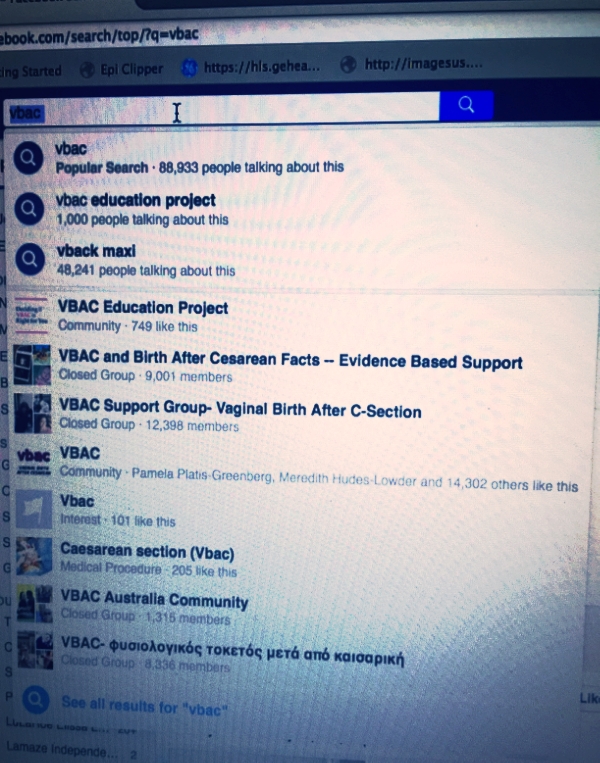
Any woman planning a VBAC knows the support for her decision is of utmost importance. Ideally this support would be found in her family and care provider. However, this might not be the case for each woman planning a VBAC or she would simply like to connect with someone making the same decision.
There is little to no research about the supportive environment affecting the rate of VBAC, but for those who have been through the experience, support is one of the key factors of successful VBAC.
In the day and age of social media, many women are turning to online communities to find the support they desire while planning a VBAC. In a recent article from the Journal of Perinatal Education, a childbirth educator describes the online support she saw for a woman who attempted a VBAC and ultimately ended up with a tertiary cesarean section. Strangers followed this woman’s story, and hundreds commented on her posts during labor.
Another journal article analyzed a VBAC forum and pregnancy forum on babycenter.com. The VBAC forum appeared more personal and supportive than the pregnancy forum based on their scoring criteria.
You may want to consider the following when joining an online group:
1. Size. Are you looking for a more intimate group where members know each other well or a larger group that might have more activity.
2. Moderation level. Some groups may have a monitor that deletes inappropriate comments or off topic threads.
3. Privacy. Is it a closed group or open to the public? How are members approved?
4. Types of questions asked. This will probably be mixed in all groups, but overall are members looking for support, medical advice, or general information.
5. Usefulness in your own life. Does the group bring you the support you are looking for, positiveness to your situation, or just a fun distraction?
There are no right or wrong answers to the considerations above. It is all based on personal preference and determination of value in your own life. If you are looking for extra support when pursuing a VBAC or want to hear from someone else going through the same situation, an online group may be a viable option.
Listening to Mother's III
Have you heard about the Listening to Mother's surveys? In 2013 the third report was published, where over 1000 women in the United States were interviewed about their childbirth experience. This report gives a snapshot of the state of maternity care in the United States.
Some of the results are mind blowing! One of the most startling results was about women being told their baby would be "big" at the end of their pregnancy. In the shared decision making section, 32% of women reported they were told their baby may be big. The majority of these mother's said their practitioner brought up an induction (62%) and 44% reported a discussion about cesarean. In the end, the average size of the baby's actual birth weight was 7lbs 13oz.
Another startling response was that 47% of first time moms reported being induced. Almost half!
In teaching childbirth classes, there is often this disconnect where you sometimes feel like you are teaching women to fight for their rights. Many elements in this report underscore the importance of women learning to be advocates for their care. But is that fair? Should a woman in labor or at the end of her pregnancy be expected to stand her ground when it comes to unnecessary interventions, or rather should it be expected that she will be offered good quality care based on evidence and putting her first?
I encourage you to check out the results and consider the state of maternity care in the US.
VBAC Series: Weight Gain, How Much is Too Much?
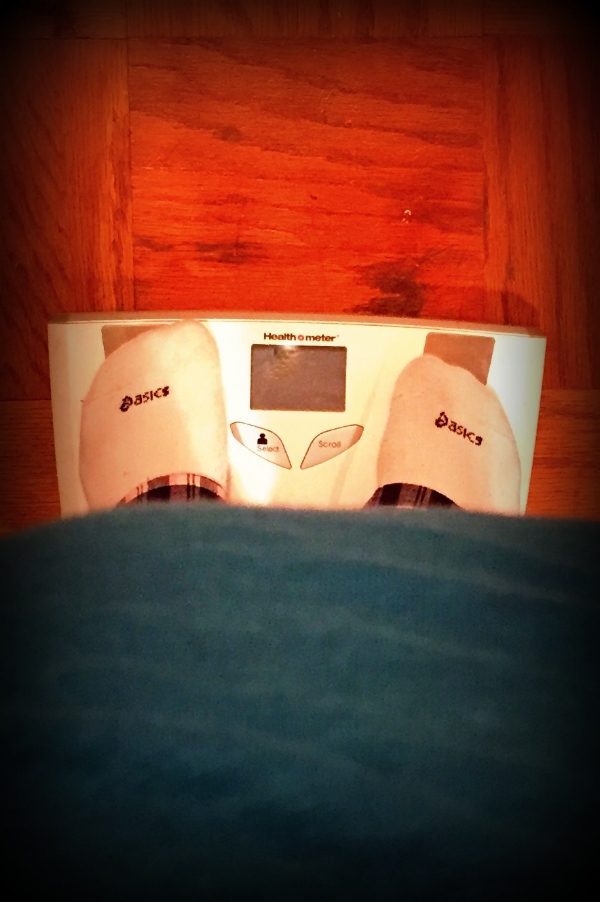
With each of my pregnancies I have gained the majority of my weight in the second trimester. As many women gain their highest amount in the third trimester or at least maintain a steady weight gain, this had myself and my providers nervous in the past.
The first time around, I was the nervous one. However, if memory serves me correctly, I didn’t gain any weight after 32 weeks and found myself delivering at the low end of my pre-pregnancy weight gain recommendation*. The second time around, it was my providers who were a little nervous. At 26 weeks I had gained 19 lbs, and was on track to gain about 35 lbs if the momentum stayed the same throughout my pregnancy. Somehow I found myself at the exact same weight gain as my first when delivering my second.
This time around I am on a similar weight gain pattern, and if history serves me well, the weight gain should start to slow down soon. But with my first VBAC pregnancy, I had to ask myself, why does my provider care so much if I gain 35 lbs? At the time I did a literature search and found gaining weight above the Institute of Medicine’s recommendation was negatively associated with successful VBAC. I was curious to see if any new literature had surfaced since that time. Here is what I found.
This article studied women considered high-risk during pregnancy, classified by hypertension, diabetes, and/or obesity. The researchers found women who gained more than the weight gain recommendations were less likely to have a VBAC. The abstract states the weight of 30lbs, but I did not find this specification in the article, just the description of exceeding recommended weight gain based on pre-pregnancy BMI. The study did not seem to consider pre-pregnancy BMI and weight gain separate from the other high-risk factors, though the majority (63%) in the study were obese. What I mean by this is, was the weight gain more impactful if the woman was already obese?
This article looked at pre-pregnancy BMI and weight gain. Both obesity and excessive weight gain, 40lbs in this article, were negatively associated with VBAC. The abstract spells out the different rates.
I found this article a little bit difficult to follow. In the abstract the authors state a BMI >25 is significantly associated with a decreased success rate. While, it never states when the BMI was measured, I can only assume that it is the labor admission BMI, as all of the other variables measured were upon labor admission (gestational age, cervical dilation, etc.). Essentially, only 20% of those in the successful VBAC group had a BMI >25, while 58% of those in the failed VBAC group had a BMI >25. The amount of weight gain that this would relate to varies, depending on a woman’s starting BMI.
Lastly, this article discussed weight gain between the first and second pregnancy. An increasing BMI between pregnancies was associated with a decreased success rate, and a decreasing BMI in women who were overweight or obese before their first pregnancy was associated with a higher success rate. If you aren’t already pregnant, and are planning a VBAC with your next pregnancy, you may want to pay attention to your inter-pregnancy weight.
To be clear, none of the authors stated that a high weight gain or BMI at the time of delivery was an indication to have a planned repeat cesarean. They were only exploring factors associated with a successful VBAC. That said, it may be prudent to only gain within the IOM’s recommendations for pregnancy weight gain while planning a VBAC.
*every woman's weight gain pattern varies during pregnancy. My own story is not an example of how it should/should not be done.
VBAC Series: VBAC Calculator, is it accurate?

Photo credit: <a href="https://www.flickr.com/photos/ansik/304526237/">ansik</a> via <a href="http://foter.com/">Foter.com</a> / <a href="http://creativecommons.org/licenses/by/2.0/">CC BY</a>
If you are planning a vaginal birth after cesarean (VBAC), you may have come across a VBAC Calculator. The VBAC calculator attempts to take variables* into account and predict the likelihood of vaginal delivery after a cesarean.
Before you break down in tears, especially if you have never had a previous vaginal delivery, lets consider a few things. A recent Letter to the Editor in Birth: Issues in Perinatal Care critiqued the use of this calculator.
An interesting point to consider is that the risk of perinatal death or hypoxic-ischemic encephalopathy in the newborn is 1 in 2000 for a woman attempting a VBAC. Even if a women’s likelihood of successful vaginal delivery is low, her risk of poor outcomes for her baby is extremely low if she does not have a VBAC in the end. Additionally, the authors pointed out that we don’t use a calculator to determine if a woman with no prior deliveries will have a successful vaginal delivery, though there are certainly factors that influence this.
Multiple studies show that the actual success rate of a VBAC is somewhere around 74%, and this increases to 94% if the woman has had a prior vaginal delivery. VBAC calculators are more accurate the closer to delivery used, rather than the start of a pregnancy. There is a second calculator that takes into account hospital admission factors, gestational age, cervical exam, etc. I was unable to find a link to a public website containing this calculator, but will update this page if I do.
I think the VBAC calculator fails to take into account a variable that I personally believe has a huge impact, the support of your provider. While some providers may initially promise the backing for a VBAC, their support may wane over the course of your pregnancy. A gestational age or predicted estimated fetal weight cut-off, strict monitoring in early labor or an epidural “just in case” may be signs your provider isn’t as supportive as they may say. Similar, a hospital setting that is not supportive of VBAC can also deter a woman’s outcome of VBAC. A woman in a supportive environment with a low prediction of vaginal delivery might just be more successful than another in an unsupportive environment with a higher prediction of vaginal delivery. Wouldn’t it be interesting if the provider’s and hospital’s VBAC rate was added to the calculator!
When I use the VBAC calculator to predict my VBAC a few years ago, I received a likelihood of 65% and without the patience of my providers it probably would have been 0%. This time the calculator predicts 91%, slightly less than what research shows. But with the same supportive providers, barring an emergency, I think the likelihood is much higher. Only time will tell!
Curious if anyone else received a low likelihood of success and went on to have a vaginal delivery. What did you find to be the biggest impact on your outcome?
* BMI is the pre-pregnancy BMI, not current. The second hospital admission calculator takes into account the current BMI
-
Breastfeeding
- Aug 2, 2018 The Breastfeeding in Public Online Debate Aug 2, 2018
- Feb 3, 2017 How Long is Too Long to Nurse? Feb 3, 2017
- Feb 1, 2016 Failure to Breastfeed, Who is to Blame? Feb 1, 2016
- Sep 22, 2015 Can Pregnant and Breastfeeding Women Eat Honey? Yes! Sep 22, 2015
-
Healthy Living
- Dec 5, 2021 Favorite Parenting Books Dec 5, 2021
- Jul 15, 2016 Picky Eater Jul 15, 2016
- Mar 25, 2016 Caffeine During Pregnancy, Safe or Not? Mar 25, 2016
- Mar 10, 2016 Anemia During Pregnancy Mar 10, 2016
- Jan 28, 2016 Portable and Convenient Snacks Jan 28, 2016
-
Parenting
- Dec 5, 2021 Favorite Parenting Books Dec 5, 2021
- Jul 15, 2016 Picky Eater Jul 15, 2016
- Feb 1, 2016 Failure to Breastfeed, Who is to Blame? Feb 1, 2016
- Jan 18, 2016 Conquering Diaper Rash Jan 18, 2016
- Oct 15, 2015 Pregnancy and Infant Loss Remembrance Day Oct 15, 2015
- Sep 22, 2015 Can Pregnant and Breastfeeding Women Eat Honey? Yes! Sep 22, 2015
- Sep 18, 2015 Pregnant and Breastfeeding: Is it Safe? Sep 18, 2015
-
Pregnancy
- Jul 8, 2016 If I Was a Betting Woman... Jul 8, 2016
- May 3, 2016 VBAC Series: Once a VBAC always a VBAC? May 3, 2016
- Apr 17, 2016 VBAC Series: April is Cesarean Awareness Month Apr 17, 2016
- Mar 25, 2016 Caffeine During Pregnancy, Safe or Not? Mar 25, 2016
- Mar 18, 2016 A Taste of Ina May Mar 18, 2016
- Mar 10, 2016 Anemia During Pregnancy Mar 10, 2016
- Feb 27, 2016 Listening to Mother's III Feb 27, 2016
- Jan 24, 2016 Episiotomy or Not? Jan 24, 2016
- Oct 15, 2015 Pregnancy and Infant Loss Remembrance Day Oct 15, 2015
- Sep 22, 2015 Can Pregnant and Breastfeeding Women Eat Honey? Yes! Sep 22, 2015
- Sep 18, 2015 Pregnant and Breastfeeding: Is it Safe? Sep 18, 2015
- Jun 16, 2015 Welcome to Birth Avenue Jun 16, 2015
-
VBAC
- Mar 6, 2021 How Can I Increase My Chances of a VBAC? Mar 6, 2021
- Jul 8, 2016 If I Was a Betting Woman... Jul 8, 2016
- May 3, 2016 VBAC Series: Once a VBAC always a VBAC? May 3, 2016
- Apr 17, 2016 VBAC Series: April is Cesarean Awareness Month Apr 17, 2016
- Apr 7, 2016 VBAC Series: What Else Does ACOG Have to Say? Apr 7, 2016
- Apr 3, 2016 VBAC Series: What Does ACOG Have to Say? Apr 3, 2016
- Mar 5, 2016 VBAC Series: Finding Support Mar 5, 2016
- Feb 21, 2016 VBAC Series: Weight Gain, How Much is Too Much? Feb 21, 2016
- Feb 12, 2016 VBAC Series: VBAC Calculator, is it accurate? Feb 12, 2016
- Feb 6, 2016 VBAC Series: Vaginal Birth After Cesarean (VBAC) Resources Feb 6, 2016